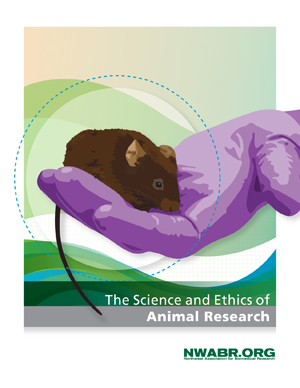
Animals in Research curriculumIntroducing our newest curriculum:

The Science and Ethics of Animal Research

Through this curriculum, students are introduced to the complex topic of Animal Research using structured discussion, stakeholder activities, case studies, and the ethical frameworks used by those in support of, and in opposition to, this work. One of the goals of the curriculum is for students to support their own position on this issue through well-reasoned, fact-driven justifications in a classroom atmosphere of respectful dialogue.

Click here to access the full curriculum.

The Science and Ethics of Animal Research

Why do scientists use animals in research? Few topics elicit such a strong reaction as that of animal research, and many teachers are hesitant to engage in the subject. Yet every vaccine, breast cancer treatment, heart surgery technique, and prescription drug developed has used animal models and subjects. How do ethical considerations influence the use of animals? What does the history of animal research tell us about current views and policies? Furthermore, how can we discuss this topic in a respectful manner?

This curriculum introduces students to how animal research is conducted, the numbers and types of animals used, alternatives to animal research, rules and regulations involved, and the bioethical frameworks used by those in support of, and in opposition to, this research. Throughout the unit, students are encouraged to consider how their own actions reflect their position on the issue. Lesson strategies and bioethical discussions engage students in science content, as well as promote an understanding of the role of science in society.

Click here for the Overview and Credits section.

Lesson Overview

The 5 E Learning Cycle Model, as publicized through its use in the BSCS (Biological Sciences Curriculum Study) science program, incorporates five phases of learning: engagement, exploration, explanation, elaboration, and evaluation. The lessons in this curriculum follow the 5 E Model, guiding students through this powerful cycle of learning. In the descriptions of the lesson plans provided below, a notation is provided of which stage of the 5 E Learning Cycle Model aligns with each lesson plan.

Lesson One: Introduction to Animal Research

Engage: Lesson One is made up of two activities. In the first activity, students begin a unit-long written conversation (Chalk Talk) in which they explore and share their thoughts and ideas about animal research by silently responding to statements, pictures, and questions posted on the classroom walls. The posters remain on the classroom walls throughout the unit and are revisited by students in Lessons 1, 3, and 5 of the unit. This provides teachers with a formative assessment of students’ understandings about animal research and human’s uses of animals.

In the second activity, students explore a number of human activities which result in animal deaths: raising animals for food, hunting, abandoning animals in shelters (which results in euthanasia), using animals in scientific research, driving on U.S. roads and highways. Students predict the number of animals impacted by each activity and then compare their predictions to actual numbers. In addition, students take a closer look at animals used only for scientific research and make predictions about what types and how many animals are used for this purpose. Lastly, students consider any possible benefits and supervision for each category.

Lesson Two: Why Use Animals in Research?

Explore and Explain: Students begin this lesson by watching video vignettes exploring the “3 Rs” (Replacement, Reduction, and Refinement) which guide scientists in conducting humane research with animals. Student groups are then introduced to several types of models, including model organisms, which scientists may use to answer different types of research questions. Using a set of Research Model Card, students explore research questions and evaluate possible methods to determine the most appropriate model for answering the research questions.

Lesson Three: History of Animal Research

Explain: Students are introduced to a brief history of animal research through a timeline mapping activity. Students are asked to order the events in the timeline and highlight the occurrence of significant events. A discussion about significant events and trends helps students understand the impacts of history on today’s regulations, governing bodies, and uses of animals in research

Lesson Four: Exploring Ethical Viewpoints

Explore & Explain: In this lesson, students are introduced to duties-based and outcomes-based ethical theories through a series of actual quotes from people who hold different views on animal research. Students then role-play the stakeholder positions. First students identify their stakeholder’s stance as coming from a primarily duties-based or outcomes-based ethical perspective, when possible, and then students align themselves around the room based on their stakeholder’s assumed support or opposition to the use of animals in research. While standing with other student stakeholders holding similar views, students record their group’s top three supporting arguments. Groups with different perspectives then join together for a Structured Academic Controversy to present and listen to alternative viewpoints. Lastly, students drop their stakeholder roles and further define and justify their individual position on the issue.

Lesson Five: Case Study Decisions

Elaborate: In this lesson, students read one of three case studies involving animals in research. Students work through a Decision-Making Framework in small groups, in which they identify the ethical question, determine which facts are known or unknown, consider the values of different stakeholder groups, generate possible solutions, and then make and justify a decision about the case. This is a jigsaw exercise, in which students first meet in “like” stakeholder groups to become experts in the values and concerns of that group. Teams are then rearranged so that each new group has students from different stakeholder viewpoints. After sharing the views and values of each stakeholder group with their peers, groups work together to generate options for solutions to the case study. Lastly, students come to individual decisions about the case and write a thorough justification. [Note: Some field test teachers suggest transitioning from Lesson Four directly to the Assessment Activity and using this lesson as a reflective tool for re-visiting the topic at a later date].

Assessment

Evaluate: At the beginning of Lesson One, students engaged in a silent Chalk Talk regarding their personal understandings and beliefs about animal research. By beginning successive lessons with students adding to these conversations students are able to observe how these understandings and beliefs change and/or grow through the unit as they add to the “conversation.”

At the culmination of the daily lessons, students engage in a whole class discussion about what they observed and how their understandings and beliefs about animal research have or have not changed as a course of the activities. This provides teachers with a formative assessment of students’ understandings about animal research and the use of animals in and by society.

As a summative assessment, students will create an Action Plan of how they will exercise their personal position on the use of animals in and by society based on background information and ethical principles.

3 Rs Poster

Download a free copy of a poster detailing the 3 Rs of Animal Research: Replacement, Reduction and Refinement. These principles guide scientists in the ethical conduct of animal research.


Animal Uses Powerpoint

This Powerpoint presentation accompanies Lesson 1 of "The Science and Ethics of Animal Research"


Webinar

This webinar was given for National Science Teachers Association to accompany "The Science and Ethics of Animal Research" curriculum

SHARE
Speaking Honestly - Animal Research Education

This program is designed to guide educators in leading a discussion-based classroom activity on the different views on the use of animals in research. The activity can be conducted in classes as small as 10 students or as large as 300-500 students and requires only a single class period of 50-75 minutes. Rather than championing a specific viewpoint, SHARE allows students to develop their own opinions based on factual information and peer-to-peer discussion. The website also provides a number of other helpful resources.


SHARE was created as part of the Americans for Medical Progress Michael D.Hayre Fellowship in Public Outreach.


AALAS  American Association for Laboratory Animal Science

The AALAS Foundation has a number of helpful resources for the public, found here.

Of special interest is the list of programs and materials that promote awareness of the benefits of biomedical research and enhance the responsible use of laboratory animals found in the Public Outreach section.

Take a guided tour through the Cedars-Sinai Medical Center's Department of Comparative Medicine with veterinarian John D. Young in this video courtesy of Americans for Medical Progress.


Links referred to in this section are not supported by the Science Education Partnership Award (SEPA).

Upcoming Animals in Research Events

Animals in Research Curriculum
Monday, November 7, 2011 - 18:00
University of Washington Faculty Club Seattle, WA
United States

The Animals in Research curriculum from NWABRWhy do scientists use animals in research? Few topics elicit such a strong reaction as that of animal research, and many teachers are hesitant to engage in the subject. Yet every vaccine, breast cancer treatment, heart surgery technique, and prescription drug developed has used animal models and subjects. How do ethical considerations influence the use of animals? What does the history of animal research tell us about current views and policies? Furthermore, how can we discuss this topic in a respectful manner?

NWABR invites secondary science educators to join us for a special Seminar Series: The Science and Ethics of Animal Research. Come to as many sessions as your schedule permits! In addition to the newest version of our Science and Ethics of Animals in Research curriculum, teachers will receive an evening meal, 3 clock hours, and a $50 stipend at each seminar.

Come to 1, 2, or all 3 of these unique intensive professional development opportunities!

Register now at: http://nwabr.org/animalseminars

October 20: Introduction to Animals in Research
4-8pm (dinner included)
Seattle Children’s Hospital and Research Institute
Background – Animals in Research, Special Vivarium Tour

October 26: Symposium on Nonhuman Primate Models for AIDS– Special Teacher Session
4-8pm (heavy hors d’oeuvres)
Bell Harbor International Conference Center, Seattle
Special presentations for educators from Primate Center Directors
Poster Session and Reception
http://nhp2011.wanprc.org

November 7: Animals in Research Curriculum
4-8pm (dinner included)
University of Washington Club (Faculty Club)
Learn about NWABR’s newest curriculum, which focuses on how animal research is conducted, the numbers and types of animals used, alternatives to animal research, rules and regulations involved, and the bioethical frameworks used by those in support of, and in opposition to, this research.

Register now at: http://nwabr.org/animalseminars

Contact Jeanne Chowning, Director of Education, with questions or to request additional information.

Nonhuman Primate Models for AIDS
Wednesday, October 26, 2011 - 18:00
Bell Harbor International Conference Center
2203 Alaskan Way
Seattle, WA 98121
United States

The Animals in Research curriculum from NWABRWhy do scientists use animals in research? Few topics elicit such a strong reaction as that of animal research, and many teachers are hesitant to engage in the subject. Yet every vaccine, breast cancer treatment, heart surgery technique, and prescription drug developed has used animal models and subjects. How do ethical considerations influence the use of animals? What does the history of animal research tell us about current views and policies? Furthermore, how can we discuss this topic in a respectful manner?

NWABR invites secondary science educators to join us for a special Seminar Series: The Science and Ethics of Animal Research. Come to as many sessions as your schedule permits! In addition to the newest version of our Science and Ethics of Animals in Research curriculum, teachers will receive an evening meal, 3 clock hours, and a $50 stipend at each seminar.

Come to 1, 2, or all 3 of these unique intensive professional development opportunities!

Register now at: http://nwabr.org/animalseminars

October 20: Introduction to Animals in Research
4-8pm (dinner included)
Seattle Children’s Hospital and Research Institute
Background – Animals in Research, Special Vivarium Tour

October 26: Symposium on Nonhuman Primate Models for AIDS– Special Teacher Session
4-8pm (heavy hors d’oeuvres)
Bell Harbor International Conference Center, Seattle
Special presentations for educators from Primate Center Directors
Poster Session and Reception
http://nhp2011.wanprc.org

November 7: Animals in Research Curriculum
4-8pm (dinner included)
University of Washington Club (Faculty Club)
Learn about NWABR’s newest curriculum, which focuses on how animal research is conducted, the numbers and types of animals used, alternatives to animal research, rules and regulations involved, and the bioethical frameworks used by those in support of, and in opposition to, this research.

Register now at: http://nwabr.org/animalseminars

Contact Jeanne Chowning, Director of Education, with questions or to request additional information.

Introduction to Animals in Research
Thursday, October 20, 2011 - 18:00
Seattle Children’s Hospital and Research Institute
1900 9th Avenue
Seattle, WA 98101
United States

The Animals in Research curriculum from NWABRWhy do scientists use animals in research? Few topics elicit such a strong reaction as that of animal research, and many teachers are hesitant to engage in the subject. Yet every vaccine, breast cancer treatment, heart surgery technique, and prescription drug developed has used animal models and subjects. How do ethical considerations influence the use of animals? What does the history of animal research tell us about current views and policies? Furthermore, how can we discuss this topic in a respectful manner?

NWABR invites secondary science educators to join us for a special Seminar Series: The Science and Ethics of Animal Research. Come to as many sessions as your schedule permits! In addition to the newest version of our Science and Ethics of Animals in Research curriculum, teachers will receive an evening meal, 3 clock hours, and a $50 stipend at each seminar.

Come to 1, 2, or all 3 of these unique intensive professional development opportunities!

Register now at: http://nwabr.org/animalseminars

October 20: Introduction to Animals in Research
4-8pm (dinner included)
Seattle Children’s Hospital and Research Institute
Background – Animals in Research, Special Vivarium Tour

October 26: Symposium on Nonhuman Primate Models for AIDS– Special Teacher Session
4-8pm (heavy hors d’oeuvres)
Bell Harbor International Conference Center, Seattle
Special presentations for educators from Primate Center Directors
Poster Session and Reception
http://nhp2011.wanprc.org

November 7: Animals in Research Curriculum
4-8pm (dinner included)
University of Washington Club (Faculty Club)
Learn about NWABR’s newest curriculum, which focuses on how animal research is conducted, the numbers and types of animals used, alternatives to animal research, rules and regulations involved, and the bioethical frameworks used by those in support of, and in opposition to, this research.

Register now at: http://nwabr.org/animalseminars

Contact Jeanne Chowning, Director of Education, with questions or to request additional information.

This program is made possible by

Science Education Partnership Award - Collaborations to Understand Research and Ethics

This curriculum was made possible by "Collaborations to Understand Research and Ethics" (CURE), supported by the National Center for Research Resources and the Division of Program Coordination, Planning, and Strategic Initiatives of the National Institutes of Health through Grant #R25OD01138.